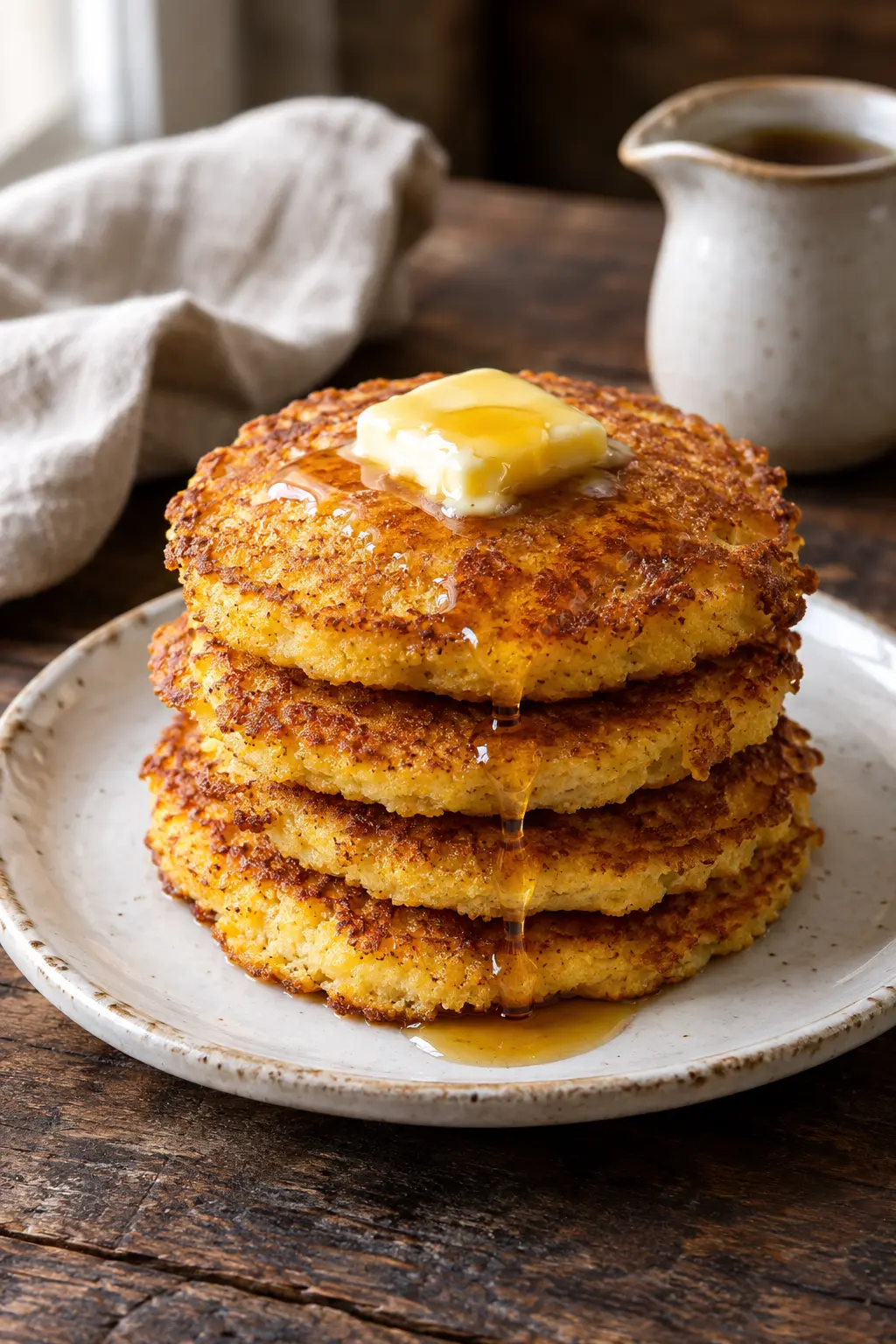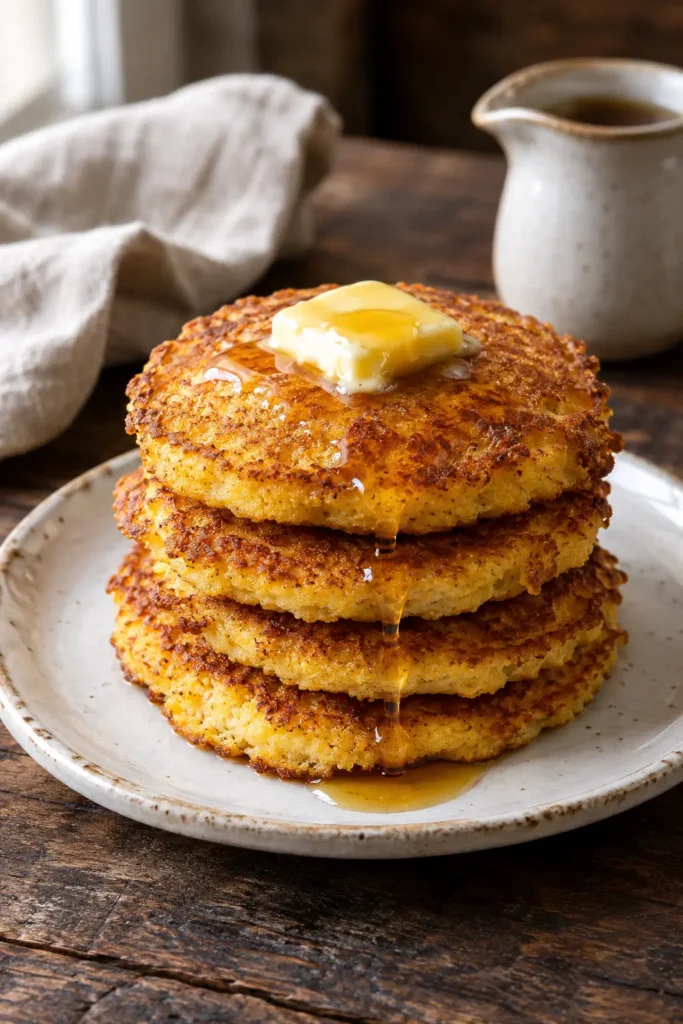
Johnnycakes are thin, crisp-edged cornmeal griddle cakes from colonial New England, made with just cornmeal, hot water, salt and a little fat. This easy modern version uses 5 pantry ingredients and takes about 25 minutes, so you can taste a piece of American food history at your own kitchen table. Use the Jump to Recipe button if you want to start cooking right away.
The History of Johnnycakes
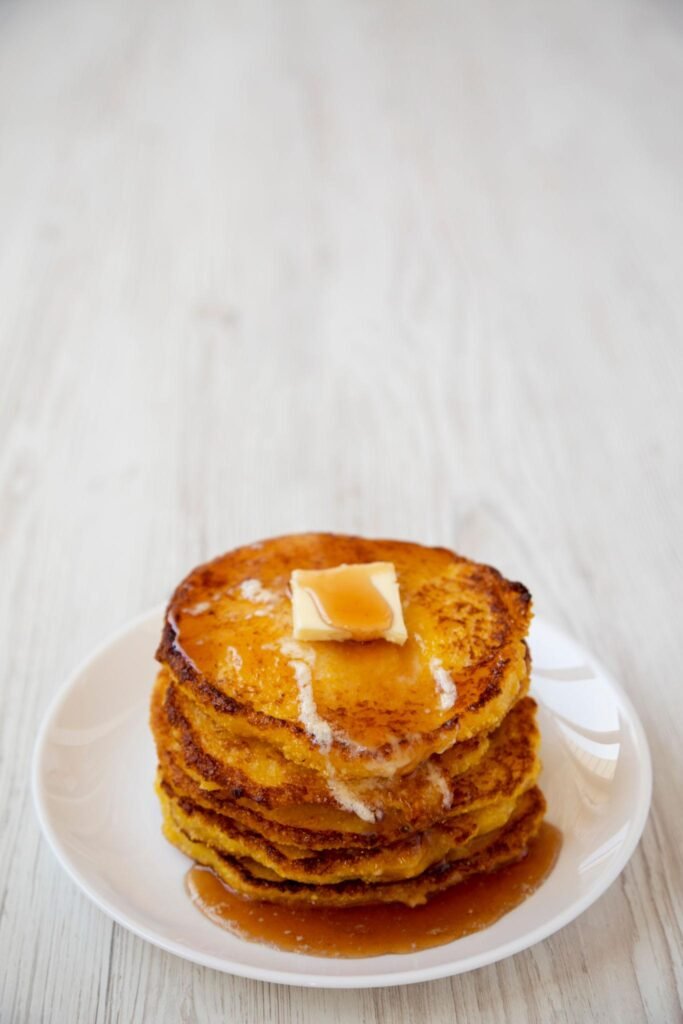
Johnnycakes began long before European settlers arrived. Native peoples of the Northeast ground dried corn and cooked simple cakes of meal and water on hot stones or in the ashes of a fire. Roger Williams, who founded Rhode Island in 1636, recorded that the Narragansett people called these cakes “nokehick.”
Colonial settlers learned the method and made it their own. Corn was reliable in New England soil, and a cake that needed only meal, water and salt was cheap and filling. Over time cooks added milk, molasses and butter, which is close to how many people make them today.
Where does the name come from?
Nobody knows for sure. One popular theory says the name began as “journey cake,” because the cakes were easy to carry and cook on the road. Another says it comes from “Shawnee cake,” slurred over time into “johnnycake.” Both stories are repeated often, but neither is proven.
Many names, one idea
Cornmeal cakes like this go by many regional names, including hoecake, ashcake, journey cake and cornpone. One of the earliest printed recipes in American cooking appears in Amelia Simmons’ cookbook American Cookery from 1796, spelled “Johny cake.”
In Rhode Island, johnnycakes are a matter of local pride. Cooks there usually insist on white, stone-ground cornmeal, and they still debate whether the meal should be scalded with boiling water first. This recipe uses the scalding method, which softens the meal and keeps the cakes from tasting gritty.
Johnnycakes, Then vs Now
| Detail | Colonial style | Our easy modern version |
|---|---|---|
| Cornmeal | Stone-ground, often white | Fine white or yellow cornmeal |
| Liquid | Water, sometimes milk | Boiling water plus a little milk |
| Fat | Lard or bacon drippings | Butter |
| Sweetener | Molasses, when available | Optional pinch of sugar |
| Cooking method | Hearth, griddle or hot stone | Skillet or griddle on the stove |
The idea has not changed. You are still cooking a simple cornmeal batter on a hot surface until the edges turn crisp and golden.
Ingredients and Substitutions
You only need cornmeal, salt, boiling water, a little milk and butter. Sugar is optional.
- Cornmeal: Choose fine or stone-ground cornmeal from the baking aisle. Coarse polenta makes gritty cakes.
- White or yellow: White is the traditional Rhode Island choice. Yellow works well and looks a little more golden.
- Milk: Whole milk gives soft centers. Plant milk works, or skip it and use a little more boiling water.
- Butter: Use oil, or bacon fat for a more old-fashioned flavor.
- Gluten-free: Cornmeal is naturally gluten-free, but check the label for cross-contamination if that matters to you.
Colonial Johnnycakes (Easy Modern Version)
Ingredients
Equipment
Method
- Whisk the cornmeal, salt and sugar together in a bowl.
- Pour in the boiling water and stir until a thick, smooth paste forms. This softens the cornmeal so the cakes are not gritty.
- Stir in the milk until the batter is thick but spoonable. Let it rest 5 minutes, then add a splash of milk if it has stiffened.
- Warm a skillet or griddle over medium heat and melt about 1/2 tbsp butter.
- Spoon about 3 tablespoons of batter per cake into the pan and flatten gently to about 1/2 inch thick. Cook 3 to 4 minutes until the edges are crisp and golden.
- Flip and cook another 3 to 4 minutes. Repeat with the remaining batter, adding butter as needed. You should get about 8 cakes.
- Serve warm with butter and maple syrup, or with a fried egg for a savory plate.
Notes
- Heritage: Johnnycakes are a New England staple with roots in Native American cornmeal cooking, adopted by colonial settlers. Rhode Island still debates the “right” way to make them.
- Texture: A thinner batter gives lacy, crisp cakes. A thicker batter gives softer, pancake-like ones.
- Cornmeal tip: Use fine or stone-ground cornmeal. Coarse polenta makes gritty cakes.
- Dairy-free: Use plant milk and oil instead of butter.
- Storage: Refrigerate up to 2 days and reheat in a dry skillet. Best eaten fresh.
Tips for the Best Johnnycakes
- Use boiling water, not hot tap water. The heat softens the cornmeal and makes the batter smooth.
- Let the batter rest 5 minutes. Cornmeal keeps absorbing liquid, so check the batter again and add a splash of milk if it has stiffened.
- Control the thickness. A thinner batter gives lacy, crisp cakes. A thicker batter gives softer, pancake-like ones.
- Keep the heat at medium. Too high and the outside burns before the center cooks.
- Do not flip too early. Wait until the edges look set and golden, about 3 to 4 minutes.
- Add butter between batches. It keeps the edges crisp and stops sticking.
Serving Ideas
Johnnycakes are flexible, so serve them the way your table likes best.
- Warm with butter and maple syrup for a classic breakfast.
- With a fried egg and a little salt for a savory plate.
- With honey, jam or fresh berries.
- Alongside soup or chili in place of cornbread.
How to Store and Reheat
Johnnycakes taste best fresh. Refrigerate leftovers in an airtight container for up to 2 days. Reheat them in a dry skillet over medium heat for a minute or two per side so the edges crisp up again.
Johnnycake FAQs
What is the difference between johnnycakes and pancakes?
Pancakes use wheat flour and a leavening agent, so they rise and turn fluffy. Johnnycakes are made mainly from cornmeal, so they stay thin, dense and crisp at the edges.
Why are they called johnnycakes?
The origin of the name is uncertain. Two common theories say it comes from “journey cake” or from “Shawnee cake,” but neither is confirmed.
Should I use white or yellow cornmeal?
Either works. White cornmeal is the traditional choice in Rhode Island. Yellow cornmeal gives a slightly more golden color and a bit more corn flavor.
Can I make johnnycakes without milk?
Yes. Use about 1 1/4 cups boiling water in total and skip the milk. You can also swap in plant milk.
Are johnnycakes gluten-free?
Cornmeal is naturally gluten-free, so the recipe usually is too. Check the cornmeal label for cross-contamination warnings if you need to be strict.
Johnnycakes prove that some of the best food stories start with the simplest ingredients. If you try this recipe, leave a rating and a comment below, and explore more dishes in our Food Through Time section.